- Reduced price
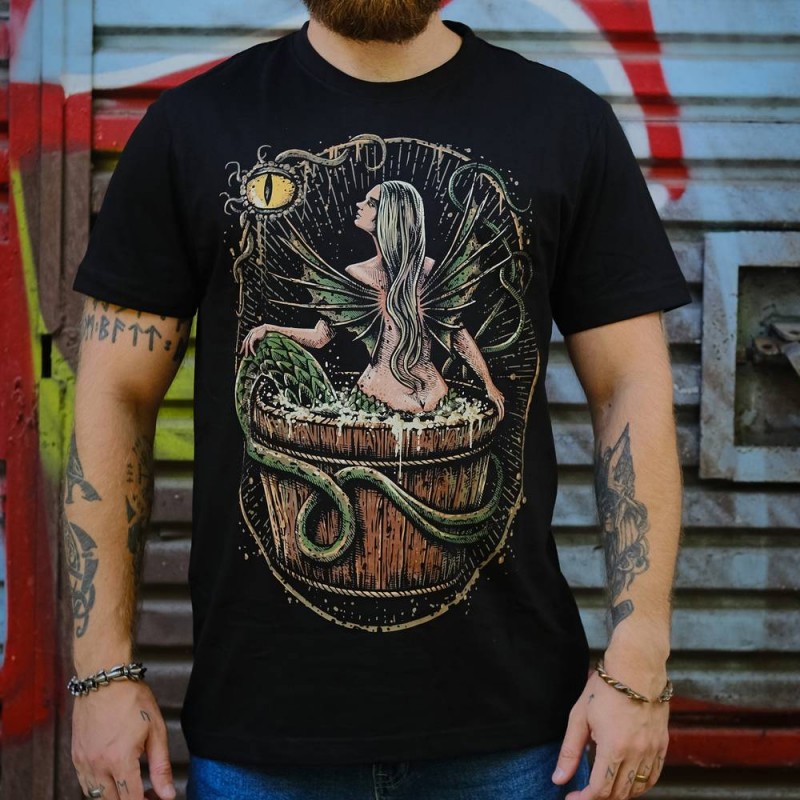

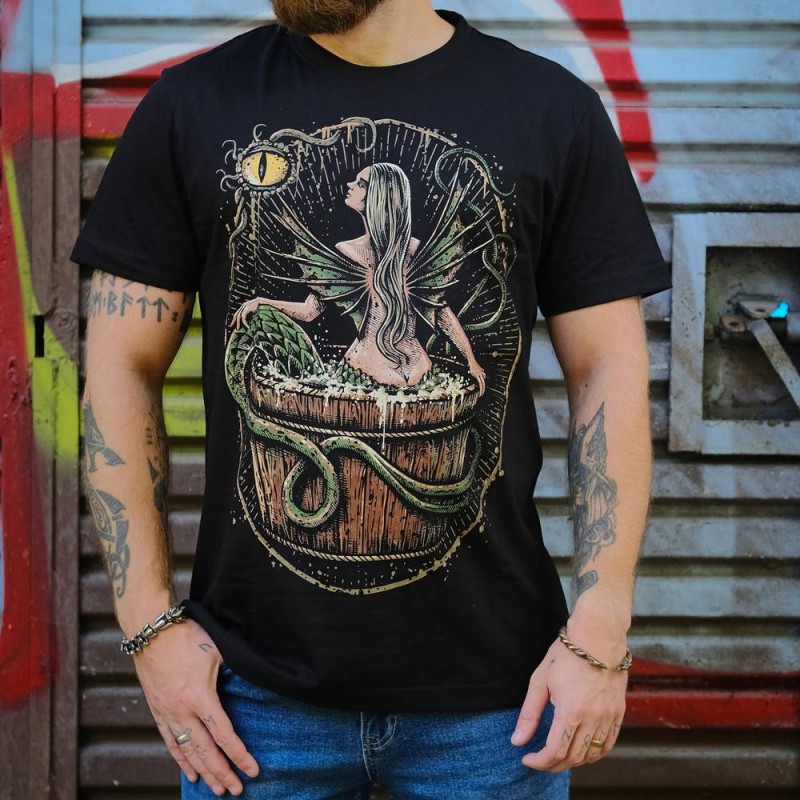


100% cotton T-shirt, 200g/m²
Available in sizes from S to 5XL
Seamless sides for enhanced comfort
Print made using the Direct-to-Film (DTF) method
Who was Melusine?
Melusine is a woman with the tail of a fish—or, in some versions, a serpent or even a dragon. But she is not a mermaid. Her story appears in the legends of medieval Europe and likely reached Silesia in the 14th century, when the rulers of Cieszyn became vassals of the Roman emperors and the Bohemian Luxembourgs.
Melusine is a tragic figure. How did her sorrowful fate begin?
It started with Elinas, a nobleman from England or Scotland, who had recently lost his wife. Hoping to escape his grief, he went hunting. In a forest, by the Well of Desire, he heard the beautiful singing of a mysterious woman—Pressine. Enchanted by her voice, Elinas invited her to his hunting lodge, where they spoke through the night. He fell in love and asked her to marry him.
Pressine agreed—on one condition: Elinas must not see her during childbirth. He promised, and the marriage flourished. In time, she gave birth to triplets—daughters named Melusine, Melior, and Palatyne.
But overcome with joy at their birth, Elinas broke his vow and rushed to see them. Pressine, furious, took her daughters to the Isle of Avalon, leaving Elinas in despair. Every day, she brought the girls to a mountain peak to look out over their father’s kingdom, reminding them of what could have been—had he kept his word.
When they turned fifteen, she told them the truth. Melior and Palatyne forgave their father, but Melusine, filled with anger, persuaded her sisters to trap Elinas and his treasure in a mountain.
Instead of praise, they returned to a horrified mother. Pressine, devastated by the destruction of the only happiness she had known, punished her daughters. Melior was imprisoned in a tower, Palatyne sealed inside the mountain, and Melusine received the harshest curse: every Saturday, her body would transform from the waist down into a serpent.
There was, however, one hope—if a man married her and never looked at her on a Saturday, she could live a normal life, perform wondrous feats, build cities, and bear children—founding the powerful House of Lusignan. But if her secret was ever discovered, she would remain a serpent forever.
Banished from Avalon, Melusine settled by a stream near Poitiers in France. One day, she met a grieving nobleman named Raymondin, who had accidentally killed his uncle. She comforted him and gave wise counsel. Grateful and smitten, he asked her to marry him. She agreed—on one condition: he must never be with her on a Saturday. Raymondin swore to uphold it.
For over ten years, their life was joyful. Melusine brought him wealth, lands, and ten children. But eventually, his relatives grew suspicious—why was she always alone on Saturdays? Why did she never attend Mass?
Plagued by doubt, Raymondin broke his vow. Upon seeing her half-human, half-serpent form, he was horrified—and publicly called her a "false serpent", betraying her in the cruelest way. Devastated, Melusine lost all hope.
In some versions of the legend, she flew out of a window as a dragon. In others, she dove into the river and vanished. It’s said she only returns to visit her children—and to fulfill the prophecy tied to her curse: she must appear whenever a Lusignan castle changes hands or a family member dies.
In one version, Melusine finds others like her and begins a new life. In another, she begs her mother for a new body. Pressine, still unable to forgive, traps her in a male form, condemning her to eternal suffering. From then on, Melusine could only return to her old shape when fulfilling the duties of her ancient curse.