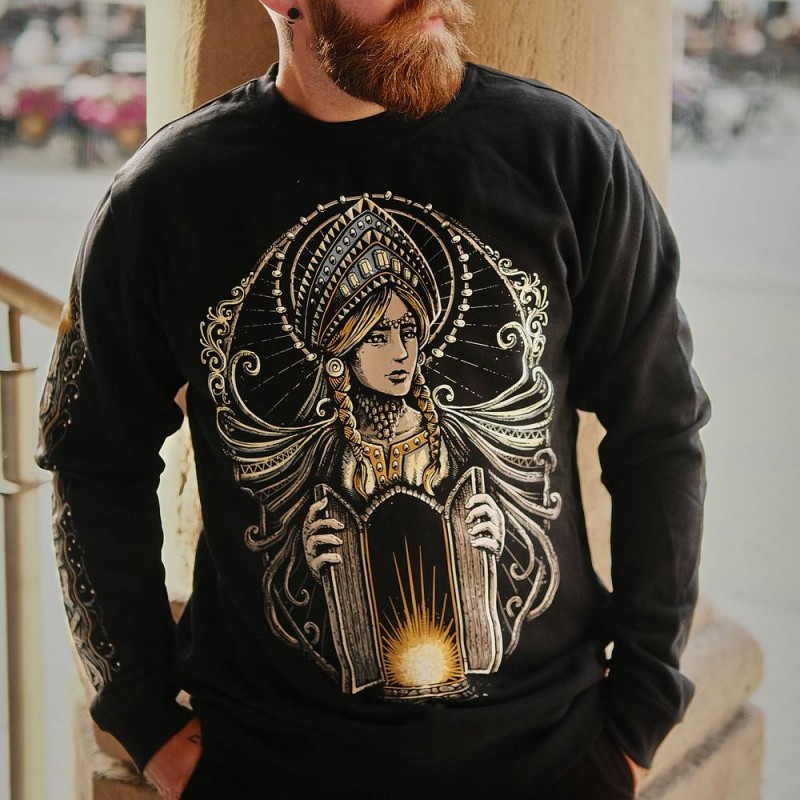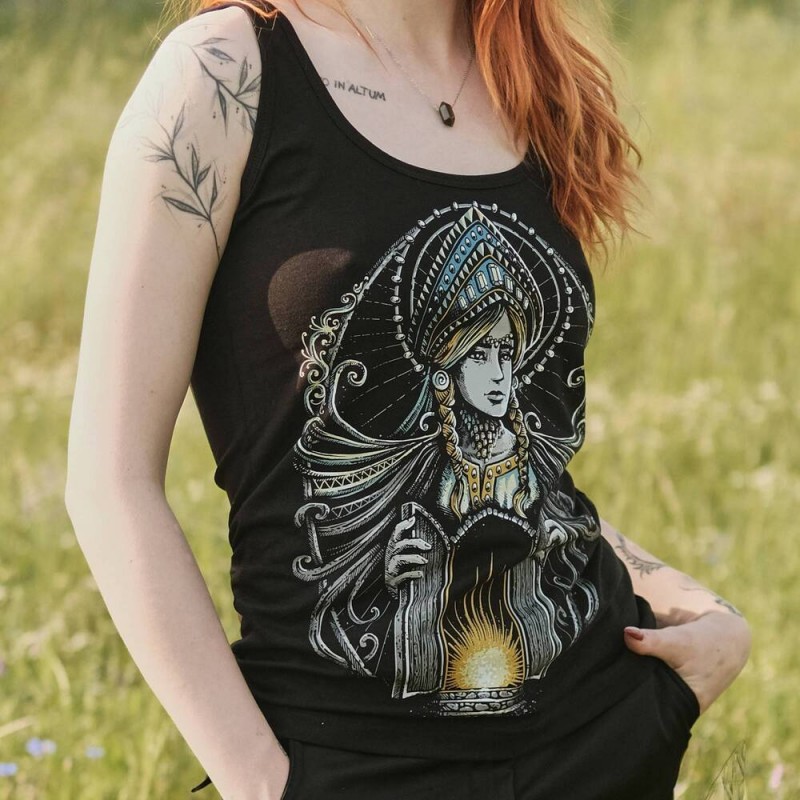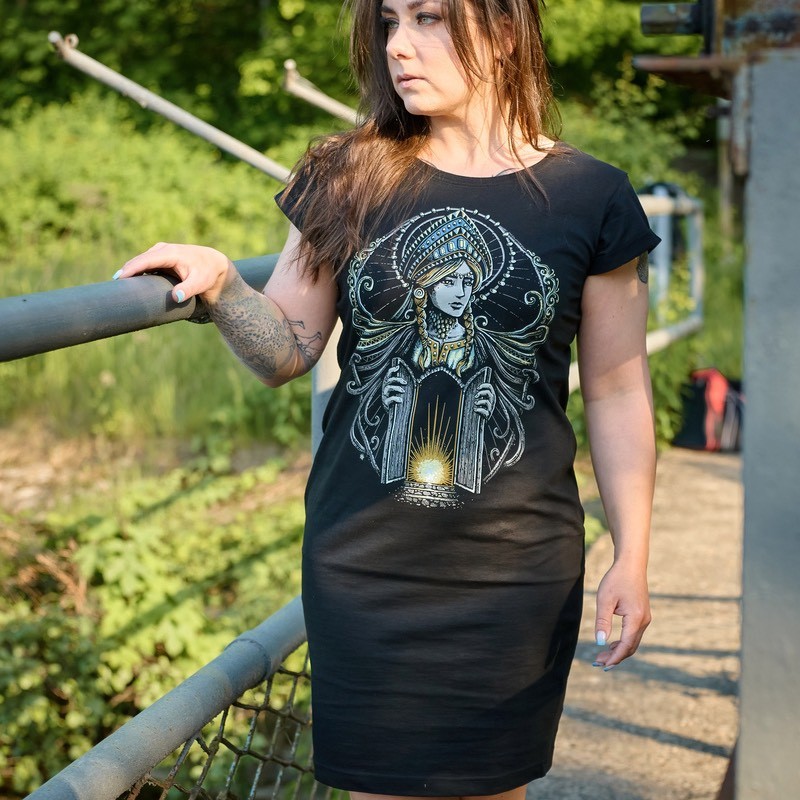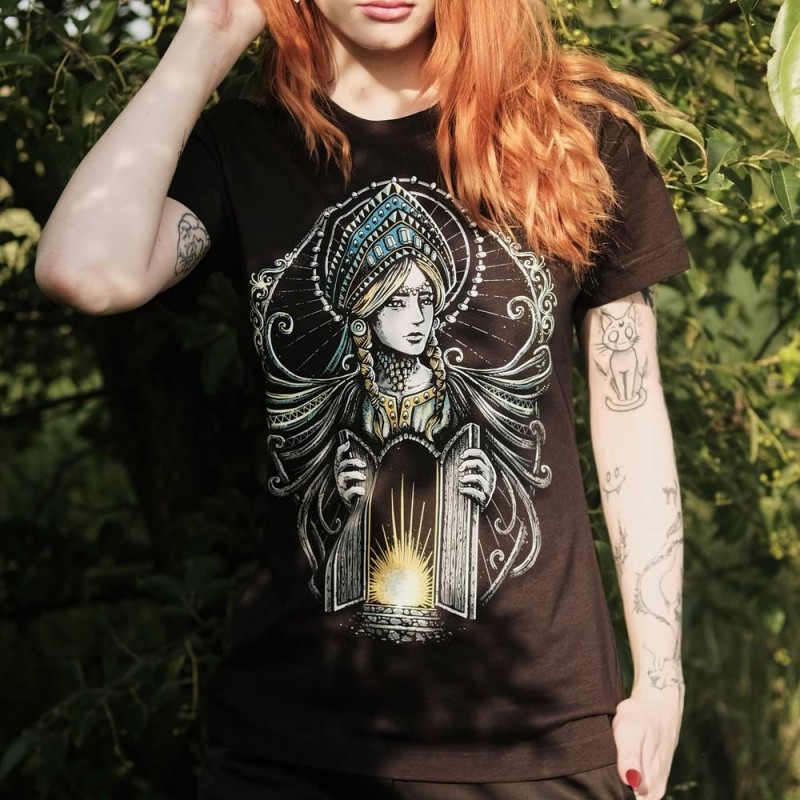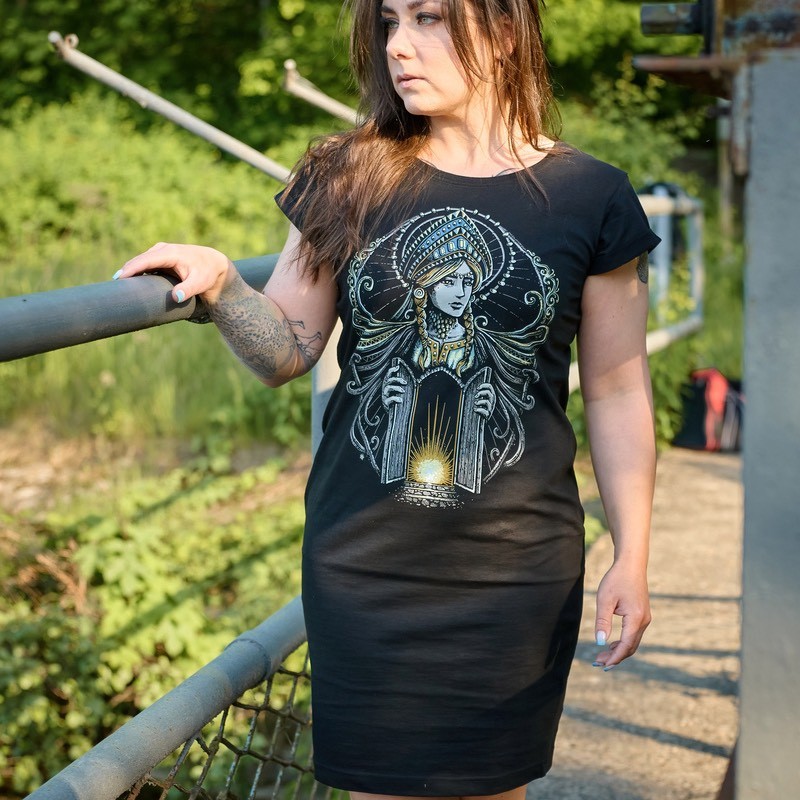




100% cotton T-shirt with 200g/m² fabric weight
Available in sizes from S to 5XL
No side seams
Print made using Direct-to-Film method
Fun Fact:
In Greek mythology, Jutrzenka is identified with Eos, the beautiful and powerful goddess of dawn. She and her siblings — Helios (the Sun) and Selene (the Moon) — belonged to the second generation of Titan gods. Eos would rise into the sky from the river Oceanus at the beginning of each day, and her rays of light would disperse the night’s fog. She was depicted either driving a chariot drawn by winged horses or soaring on her own wings.
Remember the image of morning veils being cast aside? To the Greeks, Eos had an insatiable desire for handsome young men — some say this was a curse laid upon her by the goddess Aphrodite. Her lovers included Orion, Phaethon, Cephalus, and Tithonus, three of whom she abducted to distant lands. She eventually married Tithonus, a Trojan prince. When the goddess asked Zeus to grant him immortality, she forgot to request eternal youth — and so he withered with age and eventually turned into… a grasshopper.
Ancient Rome adopted beautiful Eos under the name Aurora. Her mythology and attributes in Roman tradition mirrored the Greek ones. Her name simply means “dawn” or “sunrise,” and eventually the word came to mean “the East” and its peoples. The name may also be linked to the Latin aurum (gold), through their shared idea of radiance.
The goddess of dawn and daybreak is beautifully described by Ovid in his Metamorphoses. The most eminent elegist of antiquity portrays her as forever young and the first to awaken each day to bring the light of day in her chariot, riding across the sky before the Sun. Aurora wears a purple cloak that billows behind her as she gallops through the heavens. She scatters roses and other flowers before her, filling the morning with their intoxicating fragrance. Aurora is also said to be the mother of the four winds — though this part of the legend is Greek in origin. One spelling variant of her name, Aurura, even means breeze or wind.
In Catholic tradition, the counterpart of Jutrzenka is Lauds, the part of the Liturgy of the Hours recited around sunrise. This celebration at dawn also commemorates the Resurrection, as it was at this time that the risen Christ first appeared to the women at the tomb. The rising Sun became a symbol of the resurrected Savior illuminating all of humanity with the light of his triumph. A free, beautiful, nude goddess heralding the Sun God could not survive in the Christianized world. The Sun God didn’t either — unless, from now on, you see the dawn a little differently, and recognize the approaching power of our radiant star.