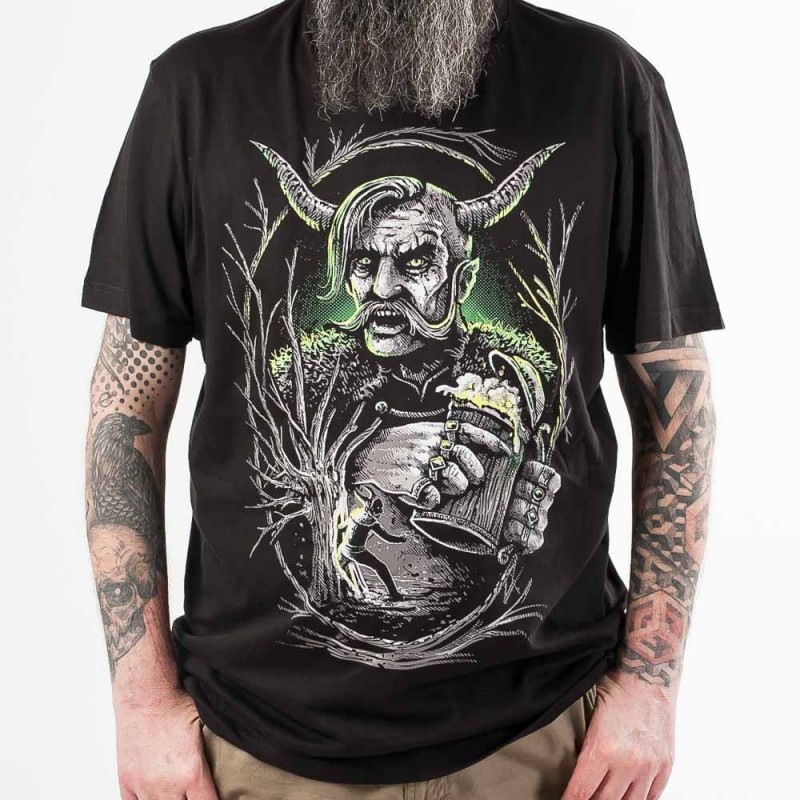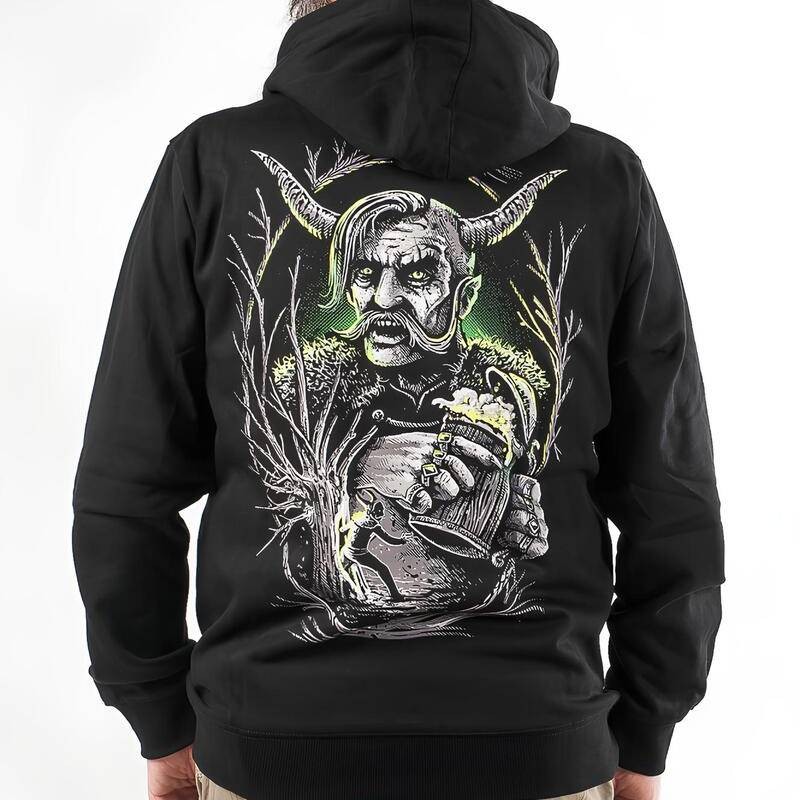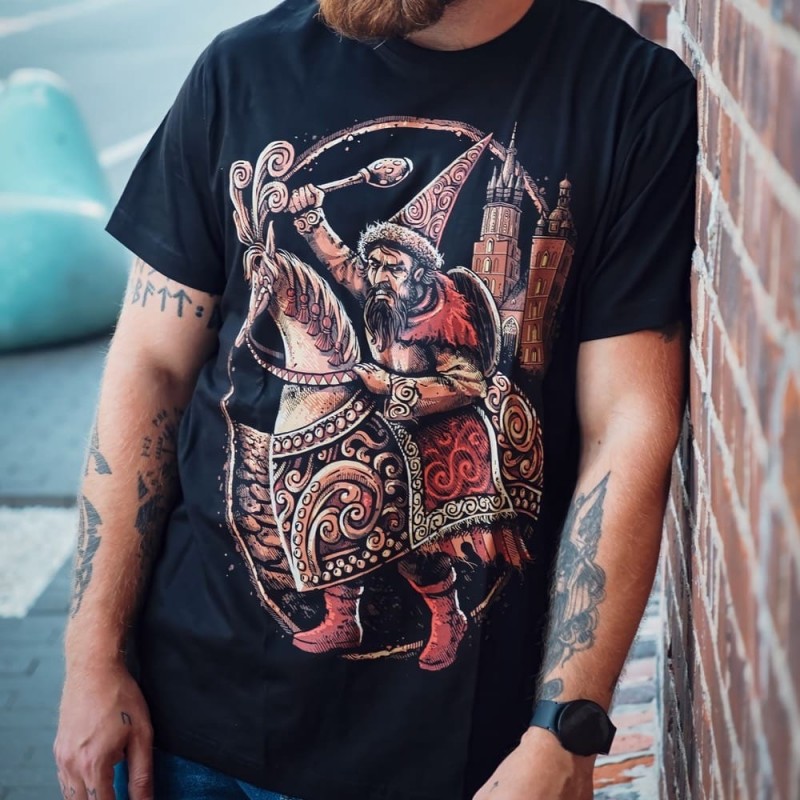
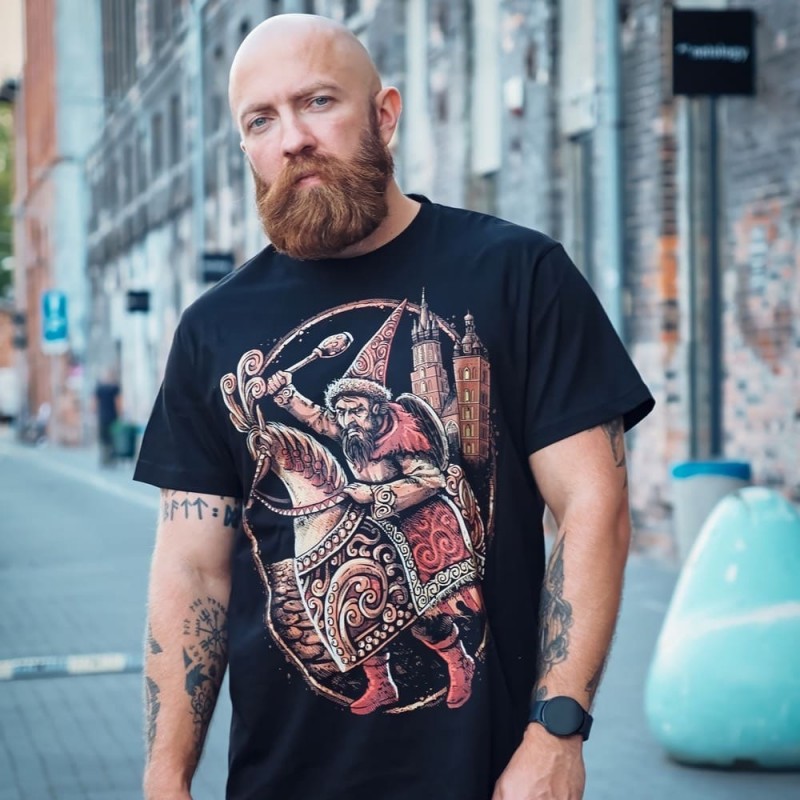
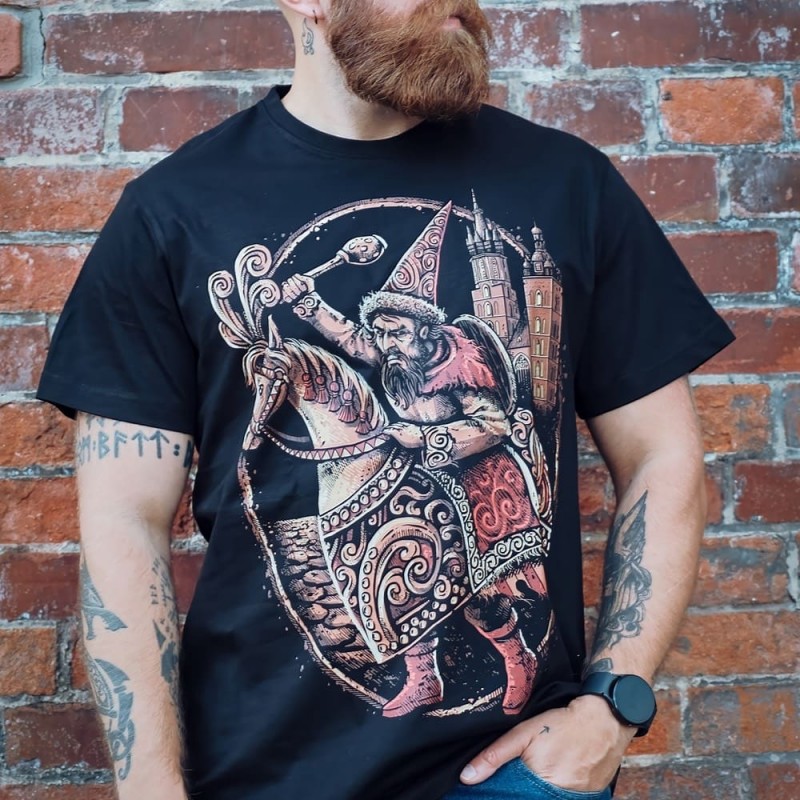
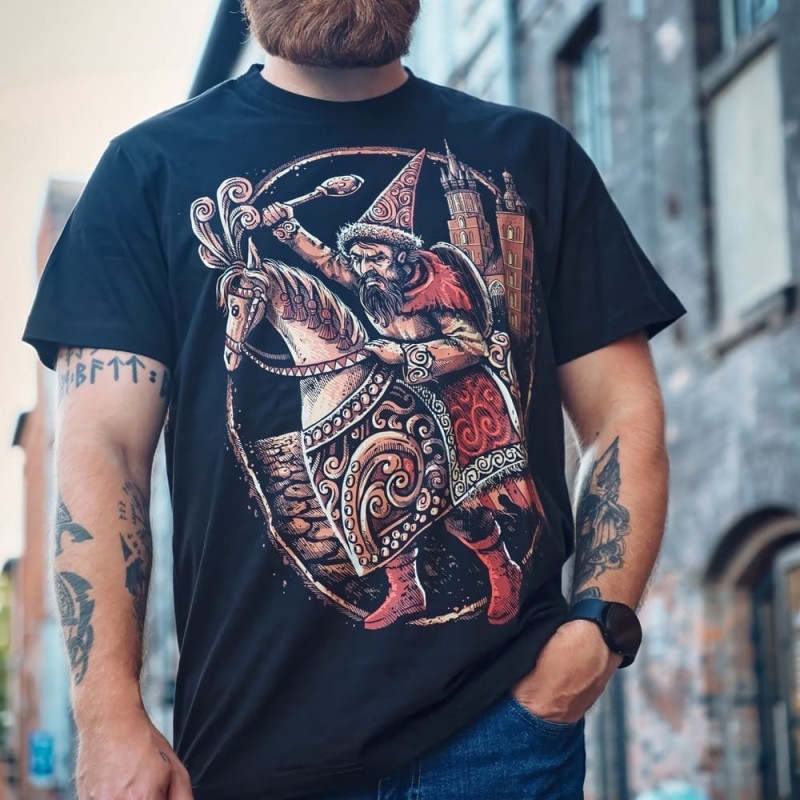

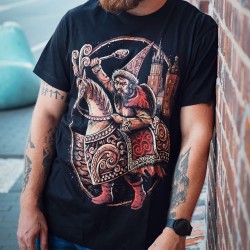
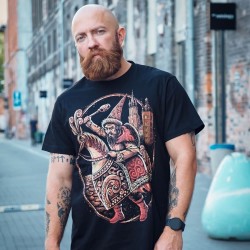
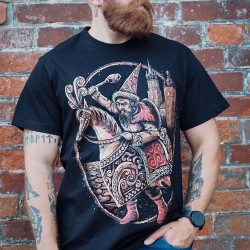
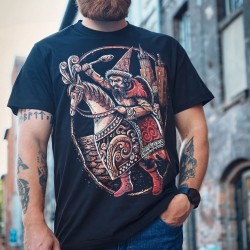
T-shirt 100% cotton, 200gsm, available in sizes from S to 5XL
No side seams
Print made using the Direct-to-Film method
Fun Fact:
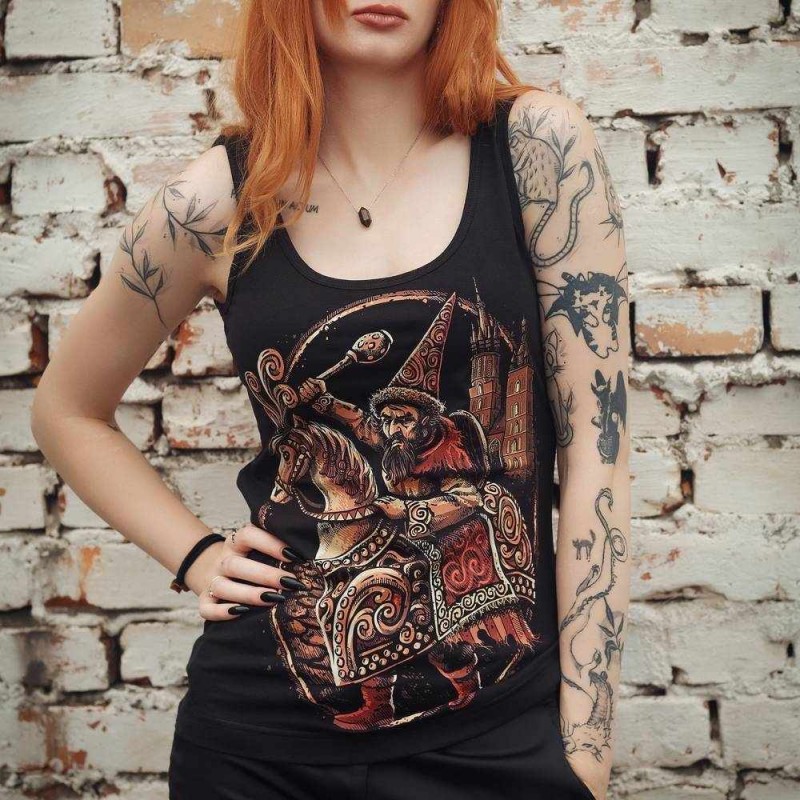
Once a year, a Tatar horseman appears on the streets of Kraków. He and his entourage attract crowds of spectators who are not at all afraid of the shouting warrior wielding a deadly mace. This popular medieval weapon, originally used to crush opponents' helmets, is now brandished by Kraków’s mascot in jest. Sure, he might strike someone with it—but it's all in good fun, as the modern Tatar invader’s mace is made of soft foam.
The Lajkonik, also known as the Zwierzyniec Horse or the Little Tatar, is one of Kraków’s most iconic symbols. The Lajkonik parade, which winds through the streets of Kraków, has been held for centuries on the first Thursday after Corpus Christi. The legend of the Lajkonik dates back to the 13th century during the time of the Tatar invasions. The Tatars, unnoticed by anyone, crept close to the city. They decided to spend the night in the reeds along the Vistula River near the village of Zwierzyniec and attack the city at dawn, taking advantage of the morning fog. But they miscalculated—their presence was discovered by raftsmen, locally known as "włóczki", who fearlessly killed the sleeping invaders, saving the city from destruction and plunder.
The raftsmen quickly dressed in the Tatars' clothing and rode into the city on the captured horses. At first, they caused fear among the townspeople, but soon it became clear they were allies, and fear turned to relief, then to celebration and joy. That very day, the Kraków governor declared that to commemorate the event, once a year, a raftsman dressed as a Tatar khan would ride into the city leading a procession of Kraków raftsmen. Today, during the traditional parade from Zwierzyniec to the Main Market Square, the Lajkonik delivers "lucky blows" with his mace—although he also wears a real dagger at his side.