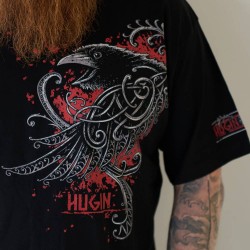
In Norse mythology, the raven is usually portrayed as a wise, all-knowing messenger — a bird of prophecy, a guardian, or a helper. This depiction is well-founded, as ravens are considered among the most intelligent animals. Studies have shown they can think abstractly, possess strong problem-solving skills, and are even capable of planning for the future.
Ravens in flight are certainly a majestic sight, soaring on their glossy black wings. But they are also omnivores, which means they will eat almost anything — nectar, fish, worms, plants, fruit, small rodents, and all kinds of carrion. There have even been confirmed cases of ravens pecking out the eyes of newborn lambs. Their tendency to steal eggs and eat chicks from other birds' nests is also well-documented.
In urban areas, ravens rarely miss a chance to rummage through trash, often leaving a terrible mess. But the presence of ravens on the outskirts of cities is not the birds’ fault — it's the result of a changing world in which they’ve simply had to adapt. Originally, these black birds inhabited only large, remote forests and vast lowlands. Interestingly, the raven is the first bird mentioned in the Bible — sent by Noah to search for dry land.
The Raven in Norse Mythology
Fascinatingly, similar roles are found in tales far removed from the Bible. In the Landnámabók ("The Book of Settlements") — an Icelandic work describing the discovery and colonization of Iceland by the Vikings — there is the legendary voyage of Flóki Vilgerðarson. When Flóki set out from western Norway, sailing via the Shetlands and the Faroe Islands to reach unknown lands, he took with him three ravens.
These black birds helped guide him during the final leg of his journey, which ended in the discovery of Iceland. The first raven, released over the Atlantic, simply flew off to the Faroe Islands. The second circled above the crew and eventually returned to the ship. The third raven was different — it flew ahead of Flóki’s boat, leading it across the wild waves all the way to the rocky shores of Iceland.
The Meaning of Huginn and Muninn: Thought and Memory
The raven’s wisdom saved Flóki — and this should come as no surprise. After all, the heroes feasting in Valhalla sat with Odin, on whose shoulders perched Huginn (Thought) and Muninn (Memory).
But did the raven also hold special meaning in Slavic mythology? Probably yes — large birds with powerful beaks were believed by the Slavs to serve as messengers. The souls of the dead (wele) were carried from Wyraj (the afterlife) to the earth to be reborn — using ravens in the winter, and storks or nightjars in the summer.
From Pagan Symbol to Devil's Familiar
In Christian tradition, there was little room for ravens — or most animals, really. They were more often seen as companions to witches or even embodiments of the devil himself, as in the story of Saint Veranus, who crushes a raven underfoot.
One rare exception is the tale of Saint Paul the Hermit, who lived in a cave in the desert with nothing but a few palm leaves to wrap around his waist. Saint Paul reportedly lived this way for nearly a hundred years, sustained only because a raven brought him food every day.
See what we’ve created with Odin’s Ravens: